


Introduction: Patient Safety and Clinic Reputation
A medical facility has a higher level of cleanliness compared to an ordinary commercial building. Patients may enter the facility with compromised immune systems, fresh wounding, highly contagious infections, and various other medical conditions that show the importance of hygiene in the medical environment. In addition, medical staff works in an environment with numerous contaminated surfaces and healthcare appliances. Therefore, cleaning services Tampa must exceed the service of keeping the medical facility tidy.
Medical office cleaning is important in establishing a safe and hygienic environment for patients, doctors, nurses, and administrative staff. A clean waiting room can help mold a positive patients’ perception of a medical facility, whereas clean examination rooms and clean surfaces popular among patients promote effective infection control.
On top of what has already been mentioned, we should not forget about considering another important aspect that is often neglected: privacy. Cleaning personnel can verify information about patients and any confidential conversations during the washing operation. Professionals whose work requires cleaning the medical facility must be aware of the necessity to maintain confidentiality and learn strict protocols for this.
In this paper, we show the characteristics of healthcare facility cleaning and present HIPAA-related issues affecting cleaning operations, the methods of dealing with blood and body fluids, and what medical offices need to know about the professional cleaning company in Tampa.
HIPAA Compliance in Cleaning Operations
The connection between HIPAA and cleaning operations is primarily related to privacy and the protection of protected health information (PHI). HIPAA does not prescribe any specific cleaning process or products. Instead, it requires healthcare entities to take necessary measures to prevent excessive use and disclosure of PHI.
According to the U.S. Department of Health and Human Services, the HIPAA Privacy Rule states that the principle of ‘minimum necessary’ requires covered entities to implement reasonable measures to restrict the use and disclosure of PHI to the extent necessary for that particular purpose.
This makes cleaning staff responsible, as cleaners have no access to information about patients without necessity.
What Can HIPAA-Related Privacy Risk Look Like During Cleaning?
In considering the situation where a janitor enters an examination room after a patient has left, he may encounter a printed patient schedule on the desk, a computer monitor showing the patient’s name and the appointment details, or possibly notes, a prescription, insurance papers, or paperwork with other identifying information, yet he does not have to get into this information when doing his job.
An efficient cleaning process in a medical office should therefore embrace some rules which are simple but important in their content:
They involve not reading, taking photos of, or discussing patient information. Janitors have to avoid moving documents for no reason and opening the drawers, cabinets, computers, or medical records unless they are allowed to do so. They have to avoid discussing patients in the facility and reporting every accidental discovery of important information to the right contact person.
In this case, compliance with such regulations is especially crucial since cleaning is done after office hours.
HIPAA Is Not Just About Cleaning Surfaces
One frequent misunderstanding is interpreting “HIPAA compliant cleaning” as a cleaning technique approved by HIPAA. However, cleaning and confidentiality are two available services in health care facilities.
A cleaning firm can help implement processes that facilitate the privacy and security program of the health care provider but the health care firm must comply with all obligations of HIPAA.
Therefore, it is important to make clear the following when discussing a cleaning contract:
- what rooms the cleaning staff can clean;
- which spaces are off limits;
- if cleaning takes place before or after patients visit the facility;
- how keys and access codes are distributed;
- what happens with confidential documents if they are found;
- whom to contact if there is a confidentiality issue.
Such planning minimizes risks of inconveniences related to confidentiality issues and helps the cleaning workers clearly understand their limits.
Request an Estimate Today
Make your home spotlessly clean with Wow Now Cleaning
Biohazard and Bloodborne Pathogen Protocols
Medical workplaces may have dangers that regular workplaces do not have. Blood, human fluids, tainted materials, and needles will pose a risk of occupational exposure to workers cleaning these places.
According to the OSHA Bloodborne Pathogen Standard, employers must ensure that the work environment is kept clean and free of contamination, creating written cleaning and decontamination schedules that depend on the facility’s type of work, surfaces, and level of contamination.
This differentiates cleaning in health sites from cleaning in any other work environment.
Cleaning Blood or Body-Fluid Contamination
Visible blood and/or body fluid contamination should never be regarded as a normal spill by professional teams. Rather, the actions that one must take depend on the facility’s exposure-control plan, the nature of contamination, surfaces involved, and articles and PPE included in applicable procedures.
Depending on the circumstances, protocols may involve:
- Access control
- Personal protective equipment usage
- Implementation of the facility’s exposure-control and spill-response procedures
- Safe removal of visible contamination
- Cleaning of the surface
- Applying EPA-registered disinfectant as per its label
- Adhering to the required contact time.
- Disposal of contaminated materials adhering to applicable procedures
- Reporting the incident when required
According to OSHA, it is a must for employees to use gloves when a possibility of coming into contact with blood and/or other possibly infected materials exists.
Cleaning companies must know their limits. Not every cleaning company worker is supposed to deal with every type of biohazard. Moreover, the facility and cleaning company should come to terms beforehand regarding the type of service and when special response is required.
Why the Product Alone Is Not Enough
Just because you purchase a strong disinfectant, it doesn’t mean that you have created a safe cleaning process. According to the CDC, it is important to choose suitable EPA-registered disinfectants and use them according to the manufacture’s recommendations on dilution, contact time, compatibility, storage, and safety.
In other words, stronger is not always better.
Using the wrong substance on the wrong surface could lead to damaging medical devices, leaving deposits behind, or failing to achieve the necessary level of disinfection. In order to get a good process, it is necessary to use a suitable substance and technique in accordance with the requirements provided for this institution.
Exam Room Sanitization
The rooms utilized for examination are very significant from the point of view of the patient-care system.
All the procedures associated with the interaction of the patient with the medical personnel can introduce pathogens, which can be transferred to those surfaces that are being touched by the patient. The other surfaces include kitchen tables, armrests, light switches, countertops, sinks, and equipment surfaces.
The recommendation of the Centers for Disease Control and Prevention (CDC) is based on the necessity of cleaning and disinfecting the surfaces that are in direct contact with the patients more frequently than touching less usual surfaces.
High-Touch Surfaces Matter Most
The disinfection of a medical facility does not have to be uniform across different areas of the practice.
Instead, the cleaning should be dictated by risks, patient exposure, level of contamination, and the protocols of the facility.
When it comes to the exam room, the cleaning list may include the following items.
- the examination table and surfaces around it
- the arms and handles of the chairs
- the countertops
- the door handles
- the switches of the light
- the sinks
- the handles of the cabinets that are regularly used
- various surfaces of noncritical medical equipment
- the floors
- the waste bins
- the other surfaces determined by the facility.
The particular obligations of the parties should be discussed by the health care institution and cleaning service because some equipment and surfaces may be cleaned by clinical staff.
Between-Patient Cleaning vs. End-of-Day Cleaning
These two duties are not to be mixed up with each other. Some surfaces or equipment demand cleaning/disinfection by the end of each patient being seen, while some other duties can all be fulfilled on a predetermined daily or periodic basis. CDC’s guidance on cleaning specifies according to the facility and has a strong focus on identifying the responsible person, frequency, method, and products used for cleaning. For instance, CDC’s guidelines for outpatient services state that waiting/admitting areas should be cleaned once a day and consultation/examination areas more often, depending on the facility. What is important is that there has to be some consistency in the cleaning process.
Waiting Area Patient Safety
Often, the waiting room is the first area inside a medical facility that a patient encounters.
It is one of the most shared spaces in the clinic as various individuals use its facilities and surfaces throughout the day.
Patients’ hands come into contact with:
- entrance doors;
- the receptionist’s desk;
- chairs;
- the armrests;
- pens;
- clipboards;
- check-in terminals;
- machines;
- the tables;
- the bathroom equipment;
Staff-Only Zone Confidentiality
Not all sections of a healthcare institution interact directly with patients.
There can be anything from patient documents to billing records in the hospital’s internal areas:
- patient personnel files;
- appointment calendars;
- prescriptions;
- billing instructions;
- employee data;
- computers;
- hard copies of departments;
In this case, cleaners might have the ability to enter those areas, but not necessarily a good reason for accessing the information behind them.
This makes it necessary to integrate confidentiality into the cleaning process.
Access Should Be Controlled
A health facility is capable of assigning various levels of access for different locations. To illustrate, cleaner staff may access areas such as:
- corridors;
- toilets;
- staff kitchen facilities;
- earth;
- public spaces;
- certain administration zones.
Other spaces may necessitate permits.
Instead of relying on its own interpretations regarding the access of workers, the cleaning team must abide by the rules of the health institution.
What Should a Cleaner Do If They See PHI?
The most basic guideline is simply: do not get involved with it.
If a custodian happens to spot a patient’s name on the office desktop or monitor, they are not to look further, snap a photo, talk with a colleague about it, or do anything else with it.
If anything has to be displaced as a result of cleaning, the appropriate procedure as determined by the organization must be followed.
This principle is one that is based on the healthcare provider’s privacy policy and minimizes unwanted risk of unauthorized exposure of protected information.
Documentation and Compliance Reporting
What mainly sets the professional cleaning of medical facilities apart from the regular cleaning is the documentation. A medical facility must have the ability to answer the following questions:
- What time did this area get cleaned?
- Who performed the cleaning work?
- What areas were cleaned?
- Did any special cleaning procedure have to be followed?
- Was there an incident of contamination?
- Was the contamination reported?
- Was corrective action taken?
While documentation may be helpful for ensuring that all cleaning procedures are followed, it cannot substitute for good cleaning.
Cleaning Logs and Checklists
CDC recommends cleaning schedules that identify responsibility, frequency, method, products, and procedures, along with checklists and job aids to help ensure cleaning is thorough and effective.
For a medical office, a checklist might divide tasks into:
Daily cleaning
Reception area, waiting room, restrooms, floors, frequently used surfaces, trash removal, and designated staff areas.
Patient-room cleaning
Exam room surfaces, patient-contact areas, room fixtures, floors, and other approved surfaces.
Periodic cleaning
Lower-touch surfaces, selected walls, baseboards, vents, fixtures, and other scheduled areas.
Special cleaning
Blood or body-fluid contamination, infectious-disease-related cleaning, post-procedure cleaning, or other facility-specific requirements.
The exact checklist should always be adapted to the type of medical practice.
Quality Control and Corrective Action
A competent cleaning service is required to have the appropriate mechanisms in place to trace an inconsistency. If the manager of a facility realizes that cleaning has not been performed properly, the response cannot be reduced down to a simple reassurance that it “will be done better next time.”
The protocol in that case is as follows:
- Find the task that has not been accomplished;
- Perform the needed cleaning;
- Investigate the reasons behind the missed task;
- Change the checklist or instructions if needed;
- Inform a member of the cleaning team about the mistake;
- Be sure to check the location during the following inspections.
The principles recommended by the CDC underline that monitoring cleaning and sanitation procedures is necessary.
Cleaning Records Give Facility Managers Visibility
Documentation can make it easier for a busy medical practice to communicate.
Instead of verbally asking a cleaner if the office was cleaned, a manager can look at the right log or checklist.
This is very helpful when dealing with multiple shifts, cleaners, or locations.
In addition, this also creates a handy record of the cleaning done by the facility.
What to Look for in Medical Office Cleaning Services Tampa
Choosing healthcare facility cleaning company Tampa providers should be approached differently from choosing a cleaner for a residential property.
Price is important, but it should not be the only question.
A medical practice should ask a potential cleaning company:
Do Your Cleaners Understand Healthcare Environments?
Cleaning a medical office requires more awareness than cleaning a traditional office.
Ask what training employees receive and whether they understand bloodborne pathogen precautions, PPE, chemical safety, privacy expectations, and facility-specific procedures.
How Do You Handle Contamination?
Ask exactly what happens if a cleaner encounters blood, body fluids, or another potentially infectious material.
The answer should be specific and should align with the facility’s own exposure-control and emergency procedures.
How Do You Document Cleaning?
Find out whether the company uses checklists, cleaning logs, inspections, supervisor reviews, or another quality-control system.
How Do You Protect Patient Privacy?
Ask how cleaners are instructed to handle confidential information that they may accidentally encounter.
What Areas Are Included?
Do not assume that “medical office cleaning” automatically includes every surface and every piece of equipment.
Ask for a written scope.
Who Is Responsible for Medical Equipment?
This should be clear before service begins.
Some equipment may require clinical staff or specially trained personnel rather than general cleaning staff.
Why a Specialized Cleaning Process Matters in Tampa Healthcare Facilities
Tampa has numerous medical offices, outpatient clinics, dental practices, specialized practices, and therapy facilities.
Each location may have its own customer base and unique cleaning requirements.
For instance, a small doctor’s office may require an entirely different cleaning schedule than a busy urgent-care clinic. A physical therapy center may have many different machines that require cleaning. Specialty practices might have additional privacy or contamination issues.
That’s why cleaning healthcare facilities should be done individually and not as a general service.
A customized approach begins with analyzing the facility.
The provider can consider various factors, including the flow of patients through the facility, the types of rooms, and the frequency of cleaning the common surfaces and other places.
After that, the needs of the practice can be determined and a proper cleaning plan can be created.
Our Approach to Medical Office Cleaning
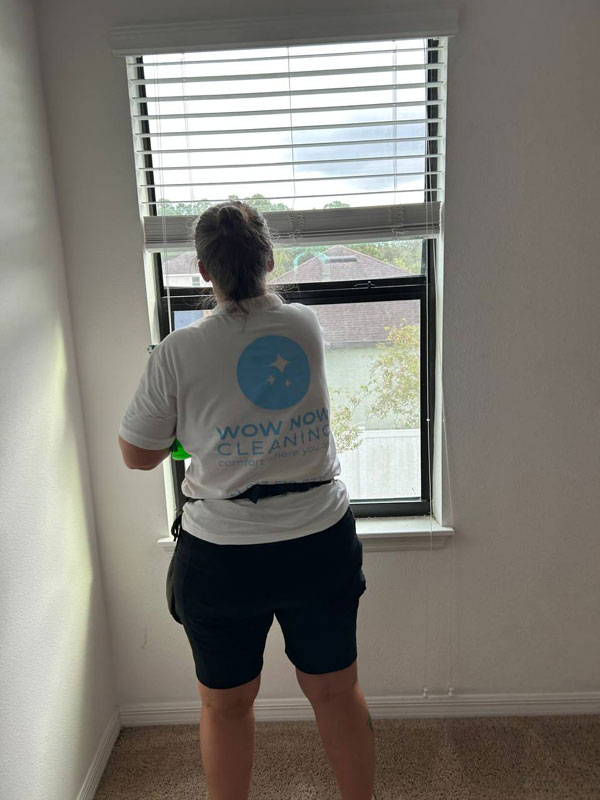
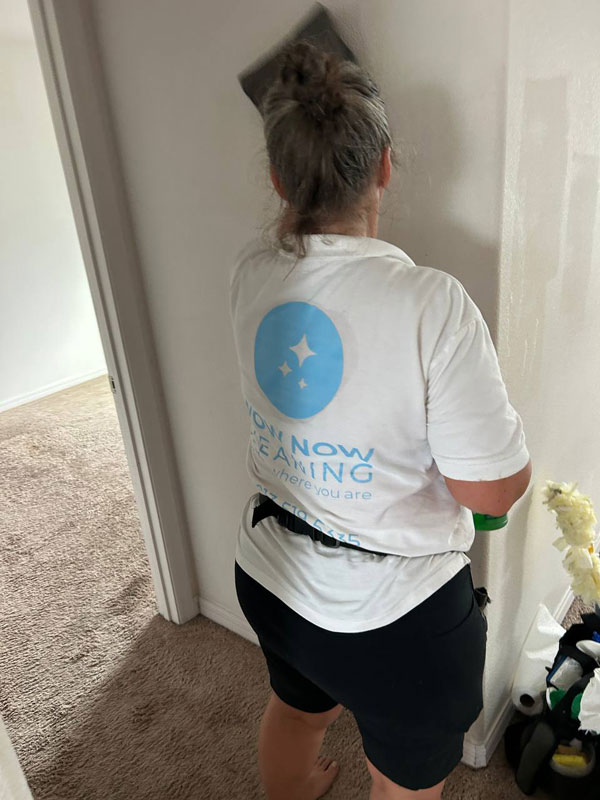
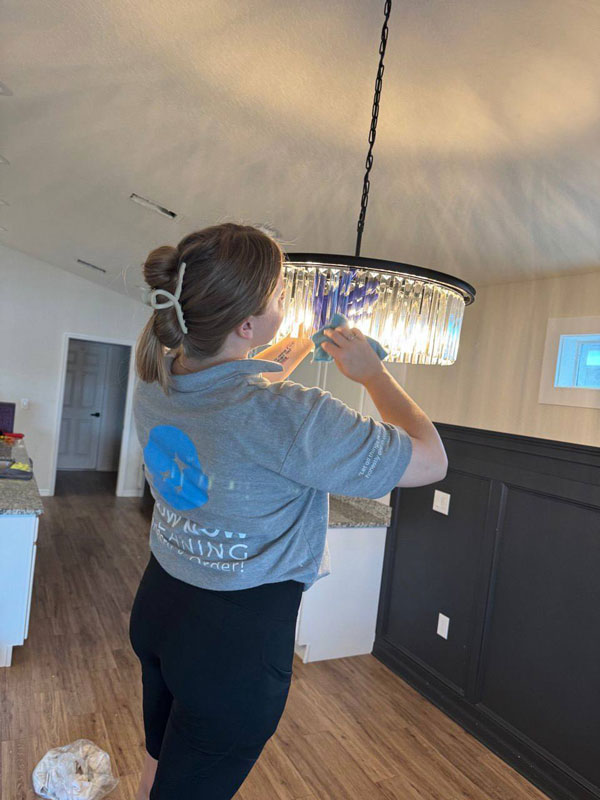
At Wow Now Cleaning, we know that cleaning a medical office requires attention to detail. Thanks to our experience in commercial cleaning, we are equipped to deal with professional environments, though cleaning medical offices involves extra considerations for patient care, shared surfaces, privacy, and rules specific to each facility. We advocate the importance of communication in establishing a successful cleaning relationship. Before starting the service, we want to understand your expectations, areas needing special attention, responsibilities of the clinical staff, and your existing cleaning procedures.
Our medical office cleaning proposal can be tailored to your schedule, facility layout, cleaning frequency, and specific service needs. Communication should not end after the first cleaning. If a facility manager spots an issue, it is vital to find a way of addressing it without repeating the same process over and over again.
A health facility is a working place. Physicians need to see their patients, nurses and aides need access to necessary equipment, administrative personnel need to work with confidential information, and patients need to be sure about their safety during their visits. The cleaning procedure has to support all these activities.
When to Schedule Medical Office Cleaning
The perfect cleaning frequency varies according to factors such as patient numbers, type of facility, use of the room, contamination risk, and other internal policies of the healthcare provider concerning infection control. Some facilities may require service every day; others may require multiple cleanings per day in areas that are relevant.
Instead of just copying the regular cleaning frequency of another business, ask yourself the following questions:
- How many patients are treated each day?
- How many examination rooms are in the facility?
- How often is the room turned in?
- How often the equipment is shared?
- How often are the restrooms used?
- How busy is the waiting lounge?
- What procedures are carried out in the facility?
- Are there vulnerable patients?
- How dirty is the facility?
- When the facility is working?
The CDC does indicate in its recommendations that cleaning frequency should be based on patient vulnerability and the risk of exposure to pathogens, as frequently touched surfaces often need to be cleaned more often. All this information helps in figuring out a much better customized schedule instead of making an arbitrary choice such as “once or twice a week”.
Final Thoughts
Cleaning a medical facility is not just about cleanliness.
It forms part of a bigger approach to provide care to patients.
Implementing an effective cleaning routine can enhance infection prevention methods, prevent closing staff from unnecessary exposure, present the place properly, and help healthcare organizations to comply with patients’ privacy standards.
The key elements to achieve this are working processes, suitable cleaning products, qualified staff, proper adherence to the rules, reporting, communicating, and valuing the medical environment.
According to the CDC, environmental cleaning is effective in practice as long as it is supported by training, adhering to common protocols, as well as feedback and monitoring of the process.
The objective for medical offices seeking medical office cleaning services Tampa must be higher than just hiring a person who can do the cleaning work. They need to find a cleaning partner that understands the specific nature of the setting, adheres to the established cleaning plan, and is familiar with how the cleaning service should fit into day-to-day business activities.
If your clinic needs a customized cleaning program, contact us to discuss your facility, cleaning needs, and preferred service frequency. We will assess the needs and deliver a medical office cleaning proposal based on the layout of your facility, the areas that need clean-up and the frequency that makes sense for your business process.
FAQ
OTHER ARTICLES

Hey everyone, I’m Khrystyna! I’ve got experience in all sorts of cleaning, which I gained at Wow Now Cleaning. Now I’m sharing it with you all! I’d appreciate any comments or feedback on my tips, so feel free to write!